Did you know a ketogenic diet can lower the LH/FSH ratio in women by 85.1%? This finding from recent studies shows keto’s big impact on female hormones. As more women try keto for weight loss and health, knowing its hormone effects is key.
The ketogenic diet is high in fat, moderate in protein, and very low in carbs. It’s become popular for tackling health issues. For women, the link between keto and hormone balance is very interesting. This guide will explain how keto can affect hormones and health in women.
Keto can help with polycystic ovary syndrome (PCOS) and menopause. It offers benefits and challenges for women at different ages. By looking into ketosis and how it affects women, you’ll learn how diet can improve your health.
If you’re thinking about starting keto or want to improve your current diet, this guide has you covered. It will give you the info you need to make smart choices about your hormones. Let’s explore keto and female hormonal balance, finding out the good and the things to consider.
Key Takeaways
- Ketogenic diet can significantly reduce LH/FSH ratio in women
- Keto may help manage PCOS symptoms and improve fertility
- The diet can impact estrogen, cortisol, and thyroid hormone levels
- Proper nutrient balance is key for hormonal health on keto
- Individual responses to keto vary, needing personalized approaches
- Regular monitoring of hormone levels is recommended when following keto
Understanding the Science Behind Ketogenic Diet for Women
The ketogenic diet is a low-carb way to manage weight and balance hormones. For women, knowing how it works is key to making healthy choices.
The Metabolic Process of Ketosis
Ketosis is when your body uses fat for energy instead of carbs. This happens when you eat very few carbs, about 20-50 grams a day. Your body then uses ketones, made from fat, as its main energy source.
Gender-Specific Responses to Ketosis
Women may react differently to ketosis than men. Hormonal changes can affect how well your body adapts to the diet. Some women see better insulin control and weight loss, while others might notice changes in their periods.
Historical Development and Modern Applications
The ketogenic diet was first used in the 1920s to treat epilepsy. Now, it’s used for weight loss and managing health issues. Studies show it helps women with PCOS, with 92% seeing regular periods after six months.
| Aspect | Impact of Ketogenic Diet |
|---|---|
| Menstrual Regularity | 92% restoration after 6 months |
| Pregnancy Rate | 55.6% among those desiring pregnancy |
| Weight Loss | Average of 7.1 kg during study period |
Understanding ketogenic diets can help you see their benefits for hormones and weight. But, everyone reacts differently. Always talk to a healthcare professional before starting a new diet.
Why Fat Loss Slows After 40 on Keto (And What Hormones Have to Do With It)
Many women notice that even when they are following a strict low-carb plan, fat loss becomes slower after 40. This is not a failure of willpower. In most cases, it is closely connected to shifts in female hormonal balance.
As estrogen and progesterone levels begin to fluctuate during perimenopause, the body becomes more sensitive to stress and insulin. These changes can affect how efficiently your body uses fat for fuel — even when you are in ketosis.
1️⃣ Estrogen Fluctuations and Fat Storage
Estrogen plays a key role in where and how fat is stored. When estrogen levels decline or fluctuate:
- The body may store more fat around the abdomen
- Insulin sensitivity may decrease
- Muscle mass can slowly decline
This is why some women experience stubborn belly fat even while following a keto diet.
The connection between keto and female hormonal balance becomes important here. A well-structured keto plan can help stabilize blood sugar and reduce insulin spikes, which supports hormonal stability rather than disrupting it.
2️⃣ Increased Cortisol and Stress Response
After 40, the body often becomes more reactive to stress. Chronic stress increases cortisol levels, and elevated cortisol can:
- Slow fat burning
- Increase cravings
- Promote fat storage, especially around the midsection
If keto is done in an overly restrictive or calorie-deficient way, it may unintentionally increase stress hormones. This is why a balanced approach to keto and female hormonal balance is critical — especially for women in their 40s.
3️⃣ Thyroid Sensitivity
The thyroid regulates metabolism. Hormonal transitions can make thyroid function more sensitive to:
- Extreme calorie restriction
- Very low protein intake
- Long-term under-eating
When metabolic rate slows, fat loss may stall — even if carbs remain low.
Supporting thyroid health through adequate protein, micronutrients, and sustainable calorie intake is essential for maintaining hormonal balance on keto.
4️⃣ Loss of Muscle Mass
After 40, women naturally lose muscle mass at a gradual rate. Since muscle tissue burns more calories than fat tissue, lower muscle mass can reduce daily energy expenditure.
If keto is paired with strength training and adequate protein, it can actually support lean muscle preservation — helping restore balance between metabolism and hormones.
The Good News: Keto Can Support Hormonal Balance
When structured properly, keto does not damage female hormones. In fact, many women experience:
- Improved insulin sensitivity
- Reduced inflammation
- More stable blood sugar
- Better appetite control
The key is not extreme restriction — but a balanced strategy that respects hormonal changes.
If fat loss has slowed, it may not mean keto is “not working.” Instead, your body may need:
- A structured reset
- A protein adjustment
- Stress reduction
- A smarter meal plan
Understanding the relationship between keto and female hormonal balance allows you to work with your body — not against it.
Essential Lab Tests Before Starting Keto

Before starting a keto diet, it’s important to know your health baseline. Lab tests can show if keto is safe for you and if you have health issues. They help support your female hormonal balance and reproductive health.
Hormonal panels are key to check your endocrine system. They measure estrogen, progesterone, and testosterone levels. This gives insights into your reproductive health. Thyroid function tests are also important because thyroid hormones affect metabolism and can change with diet.
Metabolic markers are vital before starting keto. These include:
- Blood sugar levels
- Lipid profile
- Ketone levels
Did you know blood sugar levels under 240 mg/dl are safer to avoid diabetic ketoacidosis (DKA)? DKA is more common in Type 1 diabetes but can happen in Type 2 too.
Saliva testing is very accurate for hormone levels. Dried blood spot testing is also reliable, using blood rich in nutrients and hormones. These tests give valuable info on your hormonal balance before starting keto.
| Test Type | Benefits |
|---|---|
| Saliva | Highly accurate, measures free hormone activity |
| Dried Blood Spot | Rich in nutrients and hormones, easy to collect |
| Dried Urine | Accurate across wide range of concentrations |
Remember, testing needs can differ by state. Some states allow Direct Access Testing, while others like California, Maryland, and New York have specific rules. Always talk to your healthcare provider to find the right tests for you before starting keto.
Optimizing Hormone Health Through Ketogenic Eating
The ketogenic diet can help with weight loss and hormonal balance. But, it needs careful planning to work best. Women, like those with PCOS, should focus on keto for better hormone health.
Proper Macronutrient Ratios
It’s important to balance fats, proteins, and carbs. Women usually aim for 70-75% fat, 20-25% protein, and 5-10% carbs. This helps with ketosis and hormone production.
Strategic Carbohydrate Timing
Even though keto is low in carbs, timing matters. Eating carbs around workouts or in the evening can help. It can also improve sleep and balance hormones, which is great for women trying to lose weight and balance hormones.
Quality Fat Sources Selection
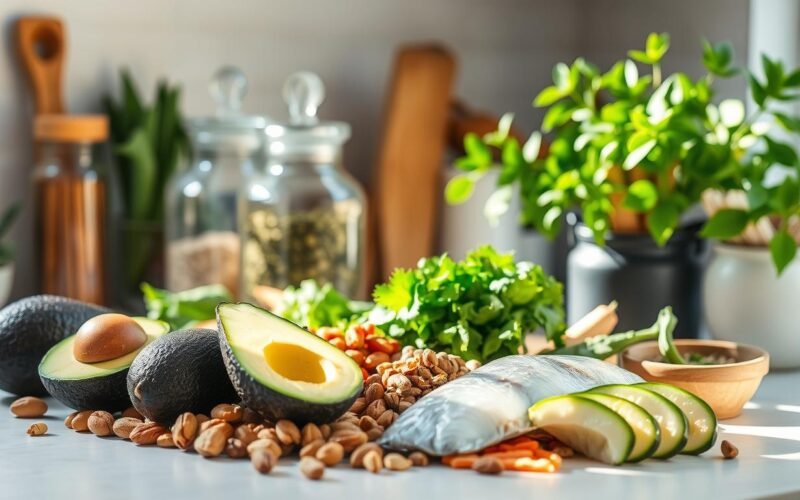
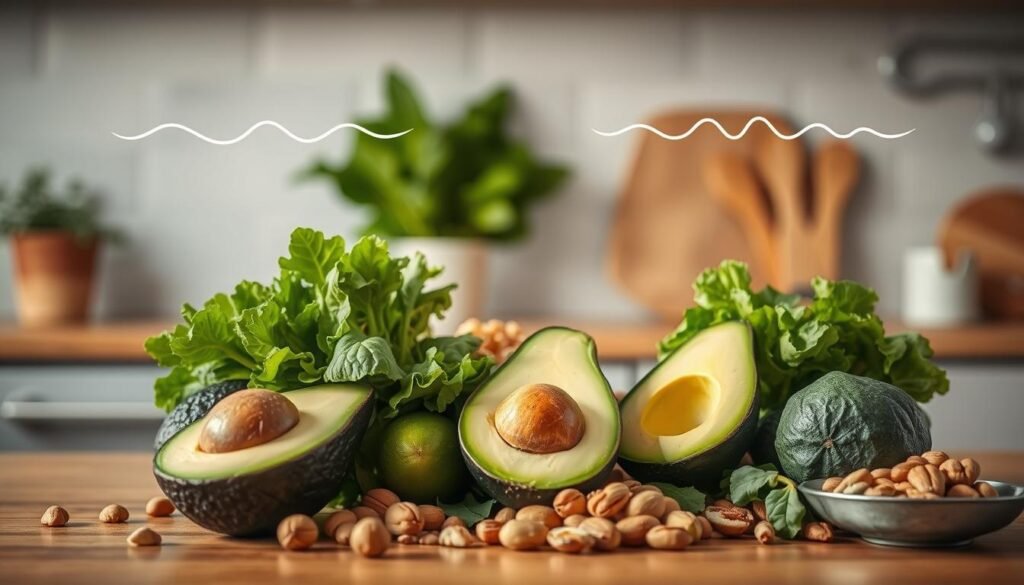
Not all fats are good for you. Choose nutrient-dense fats like avocados, nuts, seeds, and fatty fish. These support hormone production and health. For women with PCOS, omega-3s are very beneficial.
- Avocados: Rich in monounsaturated fats and potassium
- Nuts and seeds: Provide healthy fats, protein, and minerals
- Fatty fish: High in omega-3 fatty acids, supporting hormone balance
- Olive oil: Contains antioxidants and heart-healthy fats
Adjusting your keto diet can help with weight loss and hormonal balance. Remember, everyone’s body is different. You might need to try a few things to find what works best for you.
If you feel stuck despite following keto correctly, you may also want to read our guide on why keto stops working and how to restart fat loss, where we break down plateau mistakes and practical solutions.
Special Considerations for Different Life Stages
Women’s bodies react differently to diet changes at various life stages. The ketogenic diet can impact hormonal balance in unique ways. Let’s look at how keto affects women at different times in their lives.
Premenopausal Women
For premenopausal women, keto and menstrual cycle interactions are key. Some women see better cycle regularity and less PMS symptoms. The diet also seems to improve fertility, helping with ovulation and egg quality, mainly for those with insulin resistance.
Perimenopausal Transitions
Perimenopause brings tough hormonal changes. Keto might help stabilize mood swings and hot flashes by balancing hormones. It’s important to get enough folate and B vitamins during this time.
Postmenopausal Adaptations
For postmenopausal women, keto and menopause can work well together. The diet may help control blood sugar and ease menopausal symptoms. A keto diet, with 70-80% fat, 15-20% protein, and 5-10% carbs, supports weight management.
| Life Stage | Keto Benefits | Considerations |
|---|---|---|
| Premenopausal | Improved cycle regularity, fertility boost | Monitor menstrual changes, ensure nutrient balance |
| Perimenopausal | Mood stabilization, symptom relief | Focus on nutrient-dense foods, supplement as needed |
| Postmenopausal | Blood sugar regulation, weight management | Adjust macros for changing metabolic needs |
Every woman’s keto journey is unique. It’s vital to listen to your body and talk to a healthcare professional. This way, you can make the diet fit your specific needs and life stage.
Managing Common Challenges and Side Effects
Starting a ketogenic diet can change your life for the better, helping with female hormonal balance and weight. But, it comes with its own set of challenges. Women, and those with PCOS, often find it tough to adjust to keto.
Women might lose weight slower than men. This is because of hormonal differences. Women don’t have as much testosterone as men, which helps burn fat faster. Also, during perimenopause, women can gain weight because their metabolism slows down by 10-15%.
Hormone changes can also affect your keto journey. About 40% of women experience estrogen dominance during perimenopause, leading to more belly fat. After menopause, women can see a 30-50% increase in belly fat because of less estrogen.
The keto diet might also affect your thyroid hormones. This could happen to 20-30% of people. Women with thyroid issues might need to adjust how much carbs they eat.
- Keep an eye on your cortisol levels, as they often go up after age 50
- Be mindful of any changes in your menstrual cycle
- Watch for signs of insulin resistance, which affects 30-40% of adults
For women with PCOS, keto can be beneficial. Up to 50% see better insulin sensitivity, and some notice a 20-30% drop in appetite hormones like ghrelin. Also, up to 40% might see better fertility outcomes.
Remember, keto isn’t for everyone. Listen to your body and talk to a healthcare provider. This way, you can make keto work for you, keeping your hormones balanced and managing your weight effectively.
Conclusion
The ketogenic diet may help with keto and female hormonal balance. It focuses on low carbs and high fats. This can help regulate hormones and improve reproductive health if done right.
For women with PCOS, the diet shows promise. A study found that overweight women lost a lot of weight and improved their health. They also saw better hormone levels.
But, everyone is different, so it’s important to tailor your diet. Keep an eye on your health and consider getting lab tests. Some women might face issues like irregular periods or nutrient deficiencies.
Starting keto requires careful attention to your body. It can be a great way to support your hormonal health. Listen to your body and make choices that fit your needs for better hormone balance and health.